

Rugged & Off-Road SUVs in the UAE
Rugged & Off-Road SUVs in the UAE
Most off road cars sold in the UAE never leave tarmac. That is not a criticism, it is just what the numbers say. The look sells, the capability mostly sits unused, and buyers end up paying for hardware built around a desert drive they take twice a year.
So the useful question is not which SUV is toughest. It is how much genuine off road ability you need, and what you are giving up to get it.
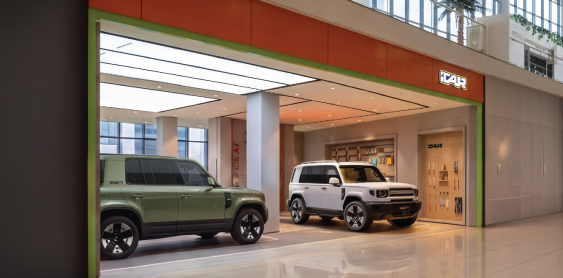
Both of the cars iCAUR sells here are SUVs, and both are range extended electric vehicles, which puts them in a category that sits slightly outside this conversation until you look at how these cars get used in practice. More on that below.
What Rugged Actually Costs You
Real off road hardware is heavy. Low range transfer cases, locking differentials, reinforced underbody protection and taller suspension all add mass, and mass shows up every day in fuel consumption, tyre wear and the way the car feels on the road.
You also pay for it twice. Once at purchase, and again every month in running costs, for capability that stays parked.
The buyers who genuinely need it know who they are. If your weekends involve Liwa, Fossil Rock or the Hatta trails with a deflated set of tyres and a recovery kit in the boot, skip to the serious section. If your idea of a desert drive is a graded track to a campsite, the middle of this list is where you belong.
Three Levels of Capability
Level one, the look. Boxy proportions, raised ride height, chunky tyres. Handles a graded track and a beach access road. This covers most buyers honestly.
Level two, soft road capable. All wheel drive, decent ground clearance, sand mode. Handles dune bashing with an experienced driver and deflated tyres.
Level three, purpose built. Low range, lockers, underbody armour. Handles anything, costs accordingly, and is overkill for the vast majority.
The Boxy Look Without the Off Road Bill
If the square jawed silhouette is the pull, several cars now deliver it without the specialist hardware price.
The Jetour T2 is the would be a better option, with 220mm of ground clearance and genuine road presence at a fraction of what a flagship luxury off roader asks. The T2 iDM adds an electrified drivetrain, which takes the edge off running a vehicle this large and this upright.
This tier is where most buyers land once they are honest about their weekends.
Electric Driving That Handles the Desert Drive
Here is where the category gets interesting, because there is now a way to get the smoothness of electric driving on a car you can point at Al Qudra without a plan.
A range extended electric vehicle drives on electric power at all times. The petrol engine on board never turns the wheels. It works purely as a generator, feeding the battery when it runs low. That matters more in this context than it sounds, because the thing that stops people taking an EV out of the city is the charger question, and a REEV removes it entirely. You refuel in the same few minutes you always have. Our what is reevexplainer covers the mechanics properly.
Two other manufacturers have reached the same conclusion. The Deepal G318 and the ROX 01 both use a range extender, and both are large, expedition styled machines priced to match that ambition.
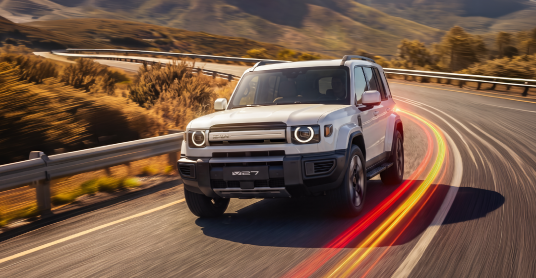
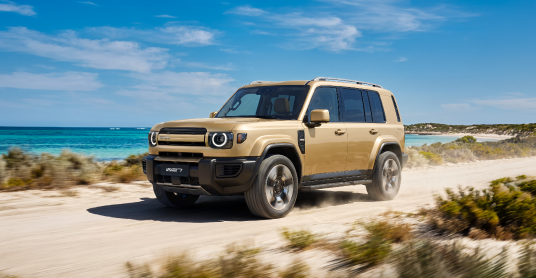
The iCAUR position is different. The V27 starts at AED 139,999 for the Classic trim, rising to AED 159,999 for Premium and AED 169,999 for Flagship. The 03T sits at AED 134,999. Both are sized and equipped for the driving people here do most weeks, with the electric feel and the fuel station fallback, without the mass and cost of gear built for terrain most owners will never cross.
Instant torque, incidentally, is useful in sand. Electric motors deliver it from a standstill without the throttle management a petrol engine needs.
When You Genuinely Need the Serious Stuff
If the plan really does involve rock and soft sand, the requirements change.
The Nissan Patrol remains the regional benchmark, and that reputation was earned rather than marketed. Any workshop between here and across the GCC has seen one. The Denza B5 is a plug in hybrid built around real off road hardware, and the Deepal G318 and ROX 01 belong in the same bracket.
These are specialist purchases. Heavy, expensive, and used at maybe a third of their capability by most owners.
Heat, Sand and the Things That Break
Two conditions dominate ownership here and neither shows up on a specification sheet.
Sustained heat is the first. Above forty degrees, cooling systems work harder, rubber ages faster and battery packs degrade more quickly than they do in temperate markets. A vehicle engineered with Gulf testing behind it will have a larger cooling capacity and different thermal management software than the same nameplate sold in Europe. Ask the dealer directly which applies to the car in front of you.
Fine sand is the second. It finds air intakes, brake components and door seals, and it accelerates wear on anything with a moving surface. Service intervals published for a global market are optimistic here, particularly for air and cabin filters, and most owners who drive off tarmac regularly shorten them by a meaningful margin.
Neither point argues for or against any particular category. Both argue for asking specific questions before you sign rather than assuming a global specification carries over unchanged.
Matching the Car to the Weekend
• Graded tracks and beach roads, mostly city otherwise: Jetour T2, or T2 iDM for lower running costs.
• Electric driving with no charging planning, desert trips included: iCAUR V27 or 03T.
• Occasional dune bashing with a group: any competent all wheel drive SUV with a sand mode and a driver who knows how to deflate tyres.
• Serious, regular off road use: Nissan Patrol, Denza B5, Deepal G318 or ROX 01.
• Presence is the point and budget is not the constraint: the full size luxury off roaders, on their own terms.
Before You Commit
Ask what proportion of your driving is genuinely off tarmac. If the honest answer is under five percent, the capability tier below what you were considering will serve you better and cost less to run every month.
Check tyres. Highway terrain rubber on a capable chassis will limit you more than the drivetrain will. Check the recovery points too, because a car without proper ones is a car you cannot help off the sand safely.
Summer heat is the other factor. Sustained forty plus degrees stresses cooling systems and battery packs alike, so ask what testing the specific model on the showroom floor has had for Gulf conditions rather than assuming a global specification carries over.
Figures here are indicative and move with trim and offers, so confirm with the showroom before you commit. For a wider view across the category, our guide to the best SUV cars in the UAE covers the picks by use case.
If the answer is that you want the electric drive without rearranging your week around a charger, book a test drive and judge it in the conditions you drive in every week.