

Comparing Cars in the UAE: How to Choose
Comparing Cars in the UAE: How to Choose
Most people compare cars by opening three tabs and lining up the specifications. It feels rigorous and it rarely produces a good decision, because a specification sheet answers questions you did not ask and stays quiet on the ones that matter.
A better approach is to compare cars on what UAE conditions test, in a fixed order, and to stop as soon as the field narrows. Four steps, each of which eliminates more than it adds.
Step One: Define the Use Case Before You Look at Anything
Write down four numbers before you open a single brochure.
Your annual mileage. Your longest regular journey. The number of people you carry on a normal week, not a holiday. And whether you can charge where you park overnight.
Those four answers eliminate most of the market before you have compared anything. A driver covering 8,000 km a year in Dubai with a villa charger and a family of five needs a different car from someone covering 30,000 km between emirates from an apartment, and no spec sheet will tell you that.
Step Two: Settle the Drivetrain
This is where most comparisons go wrong, because buyers compare a petrol car against an electric one on price and range and conclude the categories are interchangeable. They are not.
Petrol. Simplest to own and refuel, highest running cost, no charging question at all.
Hybrid. The term covers more than one thing. A standard hybrid recharges itself as you drive and needs no plug, improving consumption with no change to your routine. A plug in hybrid carries a larger battery with a dedicated electric range, usually 40 to 80 km, and rewards nightly charging. Without that charging it carries weight it never uses. Hybrid cars in UAE showrooms are often presented as a single category, and that is the source of a lot of disappointed owners.
Fully electric. Lowest cost per kilometre where charging is convenient, and the strongest argument of all if you have a home charger. Electric cars in UAE conditions perform well, with the caveat that sustained heat stresses any battery pack and that public charging costs several times what home charging does.
Range extended. Electric motors drive the wheels at all times and the petrol engine never does. It works purely as an onboard generator that recharges the battery as you go, so the car drives like an EV and refuels like a petrol car. This is the category most comparison frameworks leave out entirely, and it exists precisely for the buyer who wants electric driving without a charging dependency. Our REEV explainer covers the mechanics, and REEV compared with hybrid sets the two side by side.
Answer the charging question from step one and the drivetrain follows almost automatically.
Step Three: Range and Fuel Tank Capacity, Read Properly
Fuel tank capacity is one of the most misread figures on a brochure, because a bigger tank does not mean a longer range and a longer range does not mean a cheaper car to run.
What you want is range per fill combined with cost per 100 km. A large tank on a thirsty engine delivers the same range as a small tank on an efficient one, at twice the fuel cost. Compare the two numbers together or neither tells you anything.
The same applies to electric range. Ask what conditions the combined figure was measured under, and treat any single number as a comparison point rather than a promise. UAE heat and air conditioning load reduce real world range on every electrified car, without exception.
Step Four: Build the Five Year Number
Purchase price, plus five years of energy at your real mileage, plus insurance and servicing, minus a realistic resale figure from current used listings.
Run it for your shortlist. The ranking changes more often than not, and it changes most dramatically for high mileage drivers, which in this country is a large share of buyers.
A Worked Example
Say the shortlist is a boxy petrol SUV, a plug in hybrid and a range extended model, and the buyer covers 25,000 km a year from an apartment with no charger.
The petrol option, could be the cheapest to buy and the most expensive to run, and at that mileage the running cost gap compounds quickly. The plug in hybrid is the theoretical winner and the practical loser, because without nightly charging it delivers less than a standard hybrid while carrying a heavier battery. The range extended model drives electrically regardless, refuels at a petrol station, and does not require the charger the buyer does not have.
Change one input, give the buyer a villa with a wallbox, and the plug in hybrid becomes genuinely competitive. That is the point of the method. The answer is a function of the inputs, not of the brand.
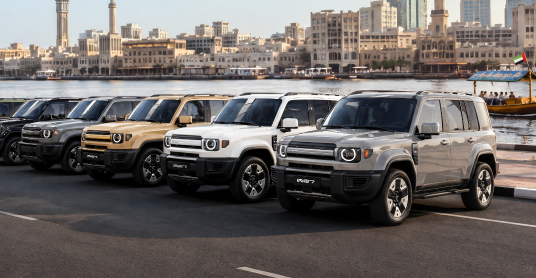
The V27 and the 03T sit in that fourth category, with up to 200 km and 171 km of pure electric range respectively and combined ranges of up to 995 km and 801 km.
For a worked comparison across a whole segment rather than a method, our guide to the best SUV cars in the UAE sorts the picks by use case.
Once the shortlist is down to two, stop reading and go drive them. Book a test drive at your own convenience!